Interior Design for Conservation Homes in Surrey & Hampshire
Surrey and Hampshire are home to many stunning homes within conservation areas – Winchester, Farnham, and Haslemere, to name just a few. These regions boast rich architectural heritage, with homes that reflect centuries of history. Designing and renovating homes in conservation areas comes with unique challenges due to strict guidelines that aim to preserve local character and heritage.
However, restoring, preserving, and enhancing properties in conservation areas can be highly rewarding. This article delves into the challenges of designing in conservation areas and explores real solutions that balance modern living with heritage preservation.
Why Mix Modern and Traditional Styles?
When working on period properties within conservation areas, several specific issues arise:
1. Restrictions on Structural Changes
Many properties in conservation areas are listed buildings or hold historical significance, meaning major structural changes may require permission from the local planning authority. Local authorities often strictly regulate changes to the facade, roofline, and even windows.
Solution:
Consultation with Local Authorities: Always engage with local planning offices before starting any work. Some changes, such as adding modern windows, may require special planning applications. Choose solutions that respect the original architecture, such as secondary glazing for energy efficiency rather than replacing windows entirely.
Use of Reclaimed Materials: Whenever possible, choose reclaimed building materials that match the original features. For example, reclaimed timber for beams or stonework that matches the original construction often works better for renovations.
2. Maintaining Original Features
People often value homes in conservation areas for their period features, such as exposed beams, fireplaces, and original timber floors. The challenge lies in preserving these features while introducing modern functionality.
Solution:
Restoration over Replacement: Restoring original features often delivers better results than replacing them. For example, if fireplaces or windows need updating, consider restoring them with modern, energy-efficient solutions.
Integrating New Features with Original Charm: When introducing modern elements, such as underfloor heating or contemporary lighting, ensure they do not overpower the existing design. For example, underfloor heating beneath original flagstone floors can provide warmth without altering the appearance.
3. Insulation & Energy Efficiency
Many older homes in conservation areas predate modern insulation standards. As a result, owners often face drafty rooms, poor temperature control, and high energy costs.
Solution:
Eco-Friendly Insulation: Consider breathable insulation materials such as sheep’s wool for older homes in conservation areas. These sustainable materials help regulate temperature while preserving the building’s integrity.
Internal Insulation: For homes with listed facades, consider internal insulation for walls or ceilings, as external insulation can alter the building’s appearance. Products such as lime plaster allow walls to breathe while improving thermal performance.
Secondary Glazing: For homes with original sash windows, secondary glazing offers a cost-effective way to improve energy efficiency while maintaining the original design. Homeowners commonly use this solution in towns like Haslemere and Farnham, where conservation guidelines strictly regulate window alterations.
Real Case Studies: Successful Conservation Area Projects
Case Study 1: Restoring a Georgian Townhouse in Winchester
Challenge: The home, located in the heart of Winchester’s conservation area, was a Georgian townhouse with beautiful period features. However, the layout was inefficient, and the heating system was outdated.
Solution:
- The team opened up the living spaces, creating a more functional open-plan layout while respecting the historic architecture.
- The team repaired the windows and installed modern double glazing behind the original sash windows to maintain the period charm.
- The team introduced underfloor heating beneath the original wooden floors, ensuring modern comforts did not affect the property’s aesthetic.
- The team updated the restored fireplaces with energy-efficient log burners, providing warmth and authenticity.
Case Study 2: Barn Conversion in the Surrey Hills
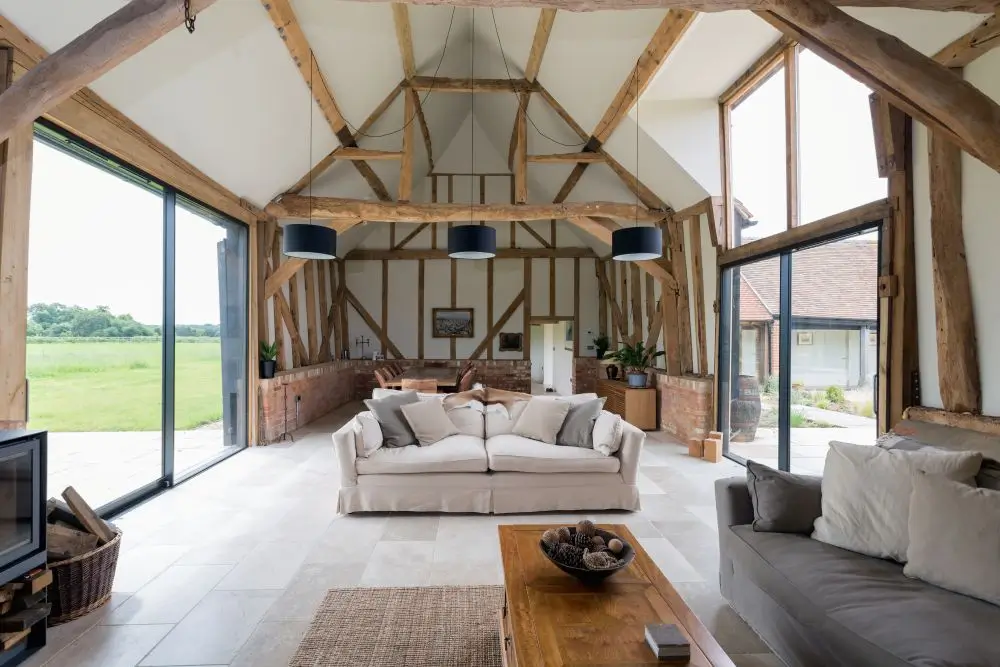
Challenge: The owners wanted to convert this former barn in the Surrey Hills conservation area into a residential home. The building featured vaulted ceilings and timber beams, but the open-plan layout lacked warmth and functionality.
Solution:
- The design focused on preserving historic elements, such as exposed beams and stone walls, while introducing modern comforts like underfloor heating and smart lighting.
- To make the large space feel more practical, the team created smaller zoned areas with reclaimed timber, breaking up the vast open spaces without compromising the open-plan feel.
- The team introduced heritage-style windows that combined energy efficiency with the barn’s rural aesthetic.
How to Design Within Conservation Area Guidelines
Final Thoughts on Conservation Area Interior Design
1. Work with Professionals
Engage Architects and Designers: Work closely with architects and interior designers who have experience with conservation areas and listed buildings. They understand local planning guidelines and can help ensure your project complies with regulations while achieving your design goals.
2. Prioritise the Preservation of Original Features
Preserving Architectural Heritage: Whenever possible, restore original features such as wooden floors, stonework, and fireplaces. If a feature is damaged, repair it or replace it with a like-for-like alternative to maintain the building’s authenticity.
3. Use Reclaimed and Local Materials
Local Stone and Wood: Incorporating local materials, such as Purbeck stone or local timber, helps your renovation blend seamlessly with the surrounding environment and the building’s heritage.
Sustainable Practices: Choose eco-friendly materials that complement the building’s original fabric, such as lime-based plaster and natural flooring options like reclaimed oak.
Designing homes within conservation areas in Surrey and Hampshire is about finding the balance between heritage preservation and modern living. By carefully following conservation guidelines, working with skilled professionals, and choosing materials that enhance rather than overwhelm historic features, you can create homes that are both functional and beautiful.
For more insights on creating interiors that harmonise with the natural beauty of Surrey and Hampshire, explore our article on Interior Design in Surrey & Hampshire: Creating Beautiful Countryside Homes.
Fingerprint Studios offers expert interior design services for homes in conservation areas, helping homeowners navigate the complexities of preserving period features while introducing the comfort and practicality needed for modern living. Whether you’re restoring a Georgian townhouse in Winchester or converting a barn in the Surrey Hills, our listed building interior design services can help you create a beautiful space with thoughtful solutions that respect and enhance your historic home.